
Trace Cullman County Former Owners Deed by Deed
The lead feature is a backward transfer timeline. Start with the current recorded deed. Add one row for each earlier transfer that matches the same legal description. Each entry earns its place only one way. The property records themselves must tie the name to that parcel. Do not insert an owner merely because of a directory, tax clue or newspaper. Those clues may place a name at the address, but that is not enough. A hunch is not a deed.
| Transfer date | Grantor to grantee | Deed type | Book/page or instrument |
|---|---|---|---|
| Newest recorded date | Seller to present grantee | Copy exact instrument label | Capture the durable citation |
| Prior recorded date | Earlier seller to that grantor | Copy exact instrument label | Match the same land description |
| Earlier book entry | Previous parties | Copy exact book wording | Note any cross-reference |
Cullman County posts no stated cutoff year for its online deed records. The index itself shows where the digital trail ends. From there, ask the Recording Division which older deed books survive in print or on office-only terminals.
Go Back Through Cullman Probate Grantors
The ING Records Cullman Probate portal anchors the search. Start with the present owner of record as grantee. Pull that acquisition deed. Then treat its grantor as your next grantee search. Repeat the loop deed by deed. Vendor guidance explains grantor, grantee, and assignee roles, including the Starts With option. The live Cullman controls deserve a test before you rely on them.
Record every detail as you go. Note the file date, instrument type, book and page, and legal description. Try spelling variants and entity names too. An unchecked option may act as a contains search. Treat that as a portal convenience rather than a promise of full Cullman coverage. One mismatched legal description can send the chain down the wrong parcel.
The Cullman Probate landing page offers the county's entry point.
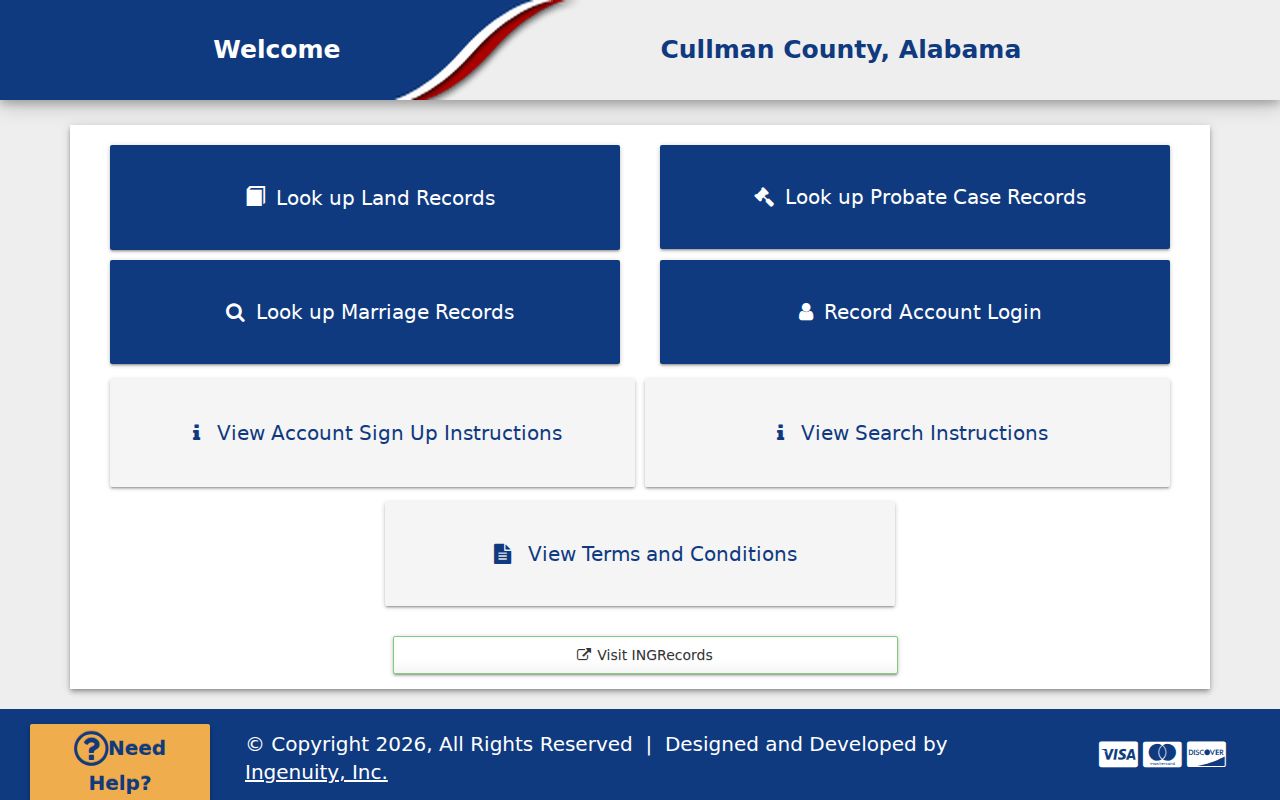
The portal only opens the index. The chain of title holds together only when every instrument matches the same Cullman County legal description, parcel line by parcel line.
Follow Cullman County Land Descriptions, Not Old Addresses
A street address can change while the land remains identifiable through a lot and block, subdivision and addition, section-township-range, or metes-and-bounds description. Those descriptions travel with the property records, so the parcel stays traceable even after a road is renamed. Use the PIN as a bridge while it continues to match, but let the recorded description control the historical link.
Capture easements, reservations, restrictions and cross-references as well as names. These details often explain odd gaps in a deed chain. A split or combination may cause the former parcel to describe more or less land than today's parcel, which is why a clean-looking name chain can still be wrong. Note: the recorded acreage, not the address, tells you when a parcel changed shape.
Reconstruct Cullman County Ownership in Reverse
Work one verified conveyance at a time. The aim is not to collect people with some tie to the address, but to reconstruct the sequence in which the same interest passed backward through Cullman County deed records. Every link in that chain should rest on a recorded deed rather than an assumption. When the chain holds, the owner of record at each step falls into place.
- Locate the latest acquisition deed and transcribe its complete legal description.
- Read the grantor, then search that party as grantee in an earlier period.
- Compare descriptions and note any lot split, addition, exception or cross-reference.
- Repeat until the index no longer supplies a verified earlier instrument.
- Ask Probate for the relevant older deed book rather than assigning an unsupported cutoff year.
- Grantor
- The party conveying an interest in the instrument.
- Grantee
- The party receiving the stated interest.
- Chain of title
- The connected sequence of instruments affecting the same land.
- Reverse index
- An index route organized to find parties in the opposite conveyance role.
- Warranty and quitclaim deeds
- Different instrument forms whose legal effect must be read, not inferred from the party list.
Rebuild Cullman County Lot Splits With Recorded Plats
Subdivision history can break an otherwise tidy chain of former owners. That happens often in Cullman County. County minutes offer useful leads. Shady Cove revisions appear in them. So do Green Tree Estates at Map Book 6 Page 41 and Bella's Ridge Second Addition near County Road 616. Those minutes document project action only. They are not substitutes for the final recorded plat. Search the exact subdivision, addition, phase, lot, and block in Probate. Then compare the plat against the deed description and the GIS polygon. A revised lot number or a changed boundary may mean following the parent tract first. Once that parent is clear, return to the present parcel.
Go Back Through Cullman County Estate and Trust Transfers
A Cullman County ownership chain can change hands in ways that go beyond a simple sale. An executor's deed or an administrator's deed may carry the parcel from one owner of record to the next. A survivorship transfer can do the same. Trust deeds, life estates, remainder interests, and court orders appear in deed records too. So search broadly. Name the decedent, the estate, the representative, the trustee, any beneficiary, and each later grantee. The probate case shows who had authority to act. The recorded deed is still the land citation you want.
Death certificates are restricted records in Cullman County. They are not meant for tracing former owners. Recent death records carry eligibility and identification rules. A certificate helps only when it bears directly on an estate-transfer question. Check the deed records and probate sources first.
About Fifty Cullman County Deed Books Entered a Preservation Story
Preservation reporting from 2018 described about fifty poor-condition Cullman County deed books slated for electronic preservation through an AMRV grant. That is real access history for local property records. It does not tell you which volumes were scanned, though, or whether their images are searchable in ING today.
For former owners who fall outside the visible portal, ask Recording Division staff about the earliest indexed book. Staff can also say whether the volume you need is digitized, microfilmed, or only available at the counter. The portal states that online land research requires an account beginning August 1, 2026. That date makes the counter and a narrow mail request two important alternatives for deed records.
Use Cullman Archives as Leads for Previous Owners
The Cullman County Public Library keeps a Genealogy Special Collection. It also offers public computers, scanning, printing, and interlibrary loan. Local reporting puts Cullman newspapers on microfilm reaching into the 1940s. Alabama Archives holds city-directory volumes for Cullman. They cover 1958 through selected later years, with gaps in between. The library's services page lays out the local tools that help. These matter when former-owner research leaves the online deed trail.
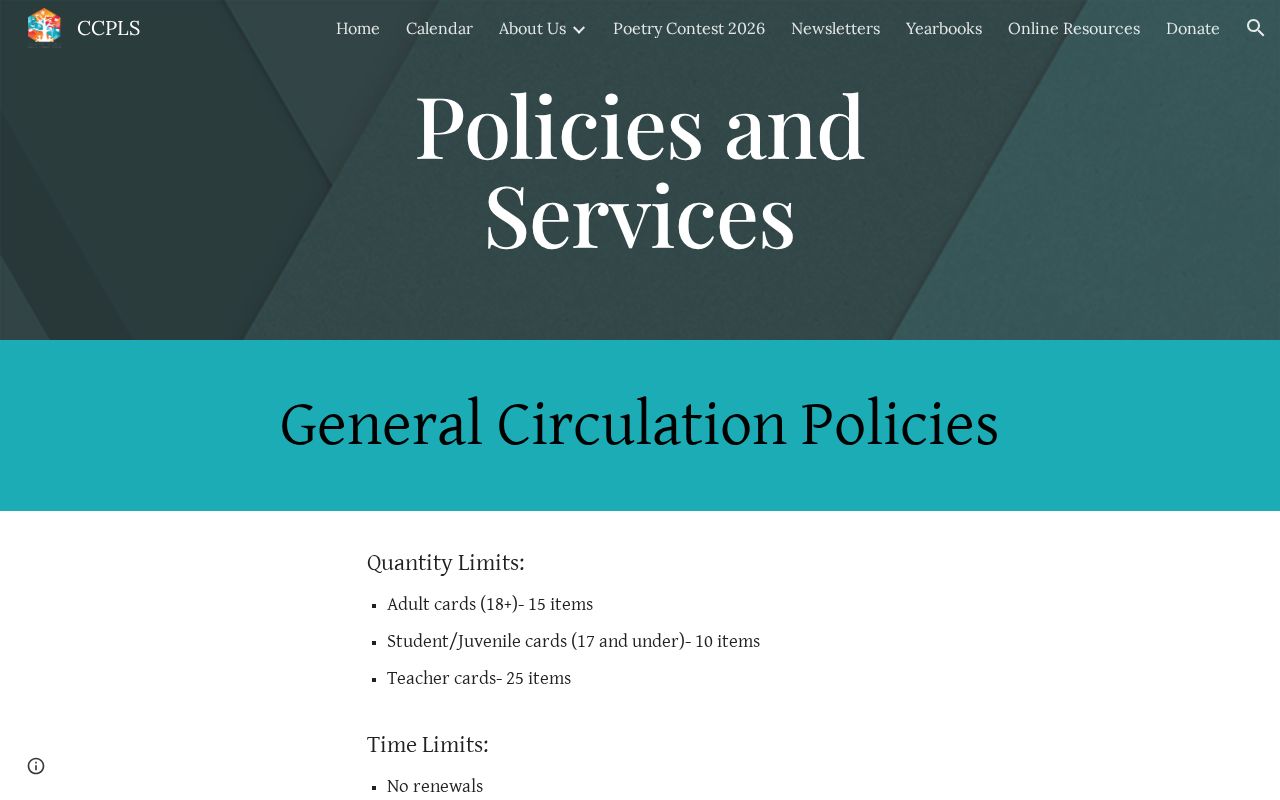
Library material can reveal an old address or an occupant fast. But the Probate instrument has to support any ownership conclusion. Directories and newspapers can tie an older address to a family. They can also point to an occupant or an event. Occupancy is still not ownership. Use the clue to go back to the deed books. The owner of record lives there. ADAH Cullman subject files and statewide FamilySearch materials may add context. Yet neither collection guarantees a specific Cullman volume or replaces Probate.
Know Where Cullman County's Former-Owner Chain Stops
Nobody outside the courthouse can pin down the exact earliest year. It belongs to Cullman County's online deed index. The county publishes no start date for it. A careful former-owner history in Cullman County therefore says plainly where the property records chain stops. It names the next step. It never borrows a cutoff from some other county. And it never assumes every old deed book has been digitized. Many have not, because the county has not scanned them all.
Online coverage is unconfirmed. Ask Cullman Probate which older deed books, microfilm or office indexes cover the parcel; never invent a first year.
For older land history, look beyond the county. The Alabama Secretary of State land records search holds a separate state corpus. You can query it by name, by township-range-section, and by book. It stretches a land inquiry further back, though it is not Cullman County's deed-book index. When the parcel's chain stops, stop there. Bring any question of legal ownership, gaps, or competing interests to a title professional.